
Tracing events, tracing economies
How political events translate into economic behavior in Belarus.
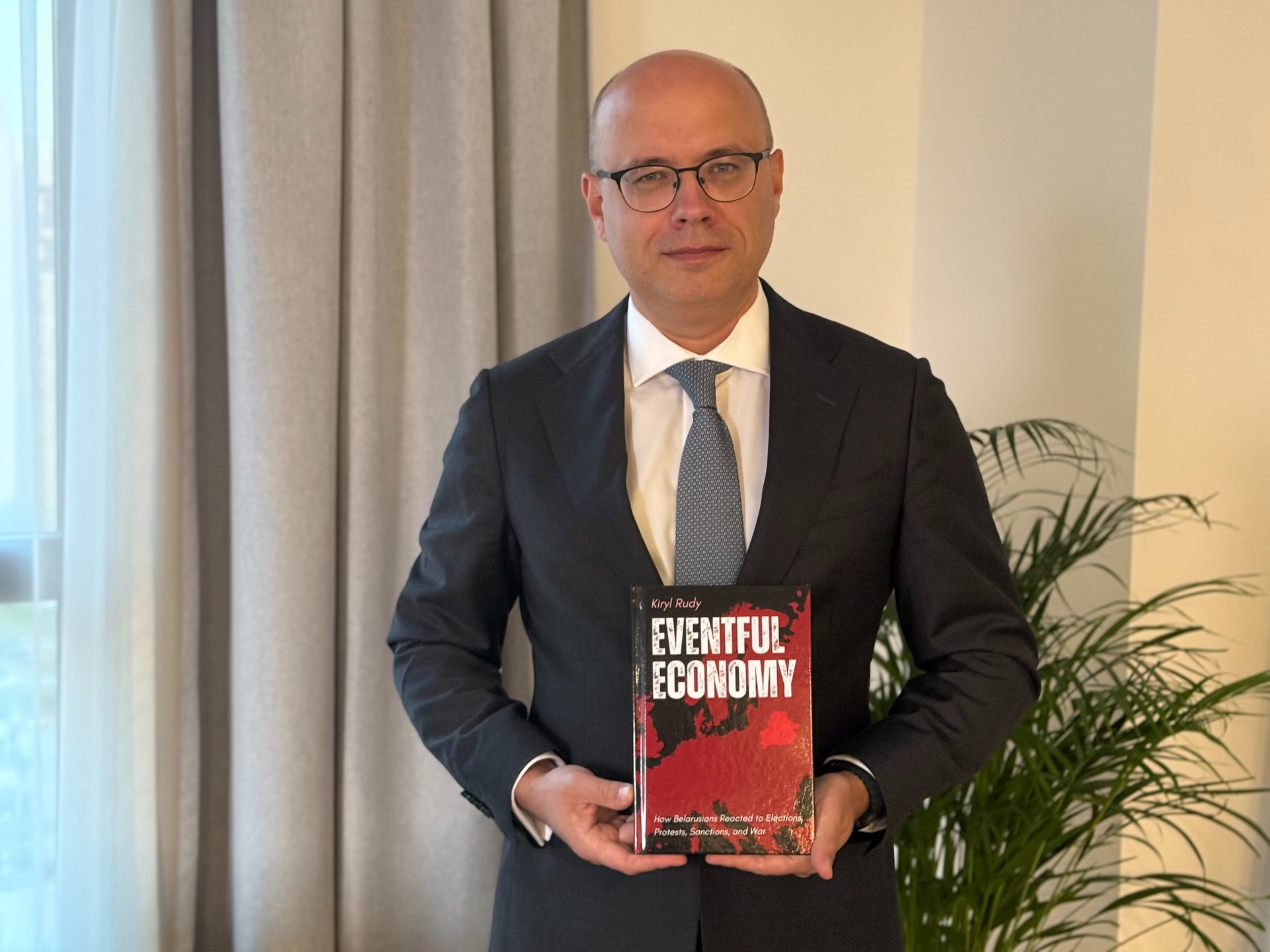
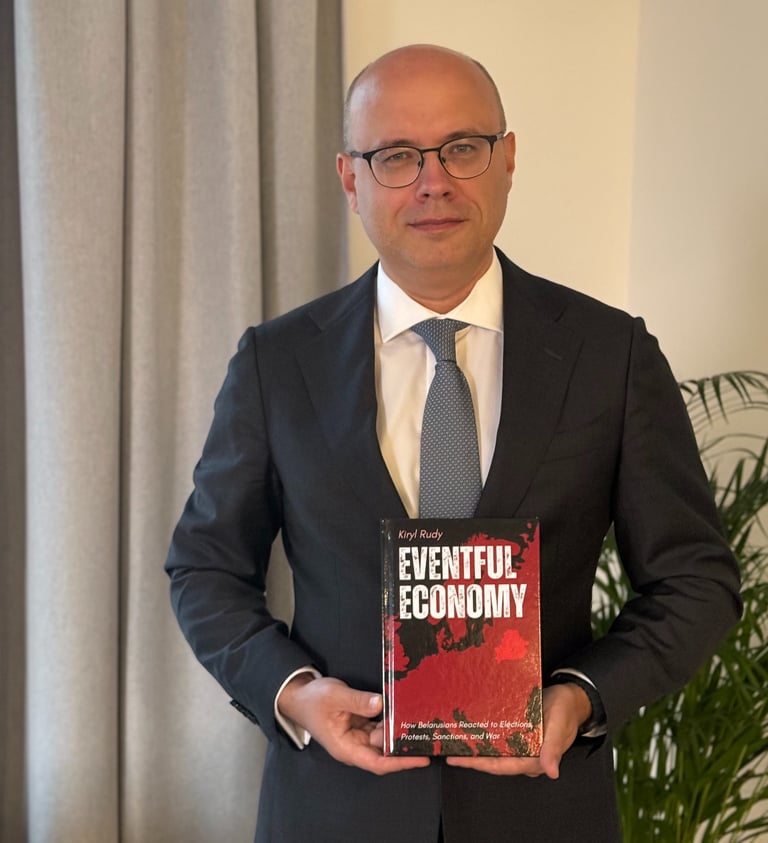
A conversation with Kiryl Rudy
How would you describe the main purpose of your book in your own words?
This book is the reflection of an economist on political events. Belarus is a unique case where one can observe the developing logic in a chain of events and their escalation: from elections to protests, from protests to sanctions, and from sanctions to war. The aim of this book is to show how people can adapt, in an economic sense, to political events.
Which of your experiences would you like to highlight to show your authority on this topic?
Even though I have an academic background and government service experience, the most valuable aspect for this topic is my personal experience of living through all these critical events and observing them through the eyes of an economist and a businessman. In this book, I tried to bring to readers the best of all worlds: business flexibility, government logic, academic principles, and personal insight.
What is the single insight from your book you want readers to notice first?
I think the main outcome of this book is that political economy serves to keep peace. If we cannot stop ourselves on the escalation ladder, events will turn the economy from a political one into a military one. Unfortunately, people can adapt to very different and complicated events. If they could not, it might prevent some bad events that ultimately worsen people’s economic lives.
How would you summarize the story of Belarus’ economy and politics in a few sentences?
A new era in the political economy of Belarus began in 2020. There are many more shades than simple black-and-white features. These five years represent a transition toward a new political and economic equilibrium. The world has also changed over the last five years, but the case of Belarus stands out for the depth and frontline nature of its political economy transformation under intensified events.
How would you personally invite readers to check out your book?
This book is about recent political events in Belarus and in the so-called Russian backyard. How Belarusians reacted to unprecedented events from a financial and economic perspective was pragmatic and more business-oriented rather than politically sensitive. This book can help enrich your knowledge of Belarusian and regional political economy through the lens of evolving events.